About Me
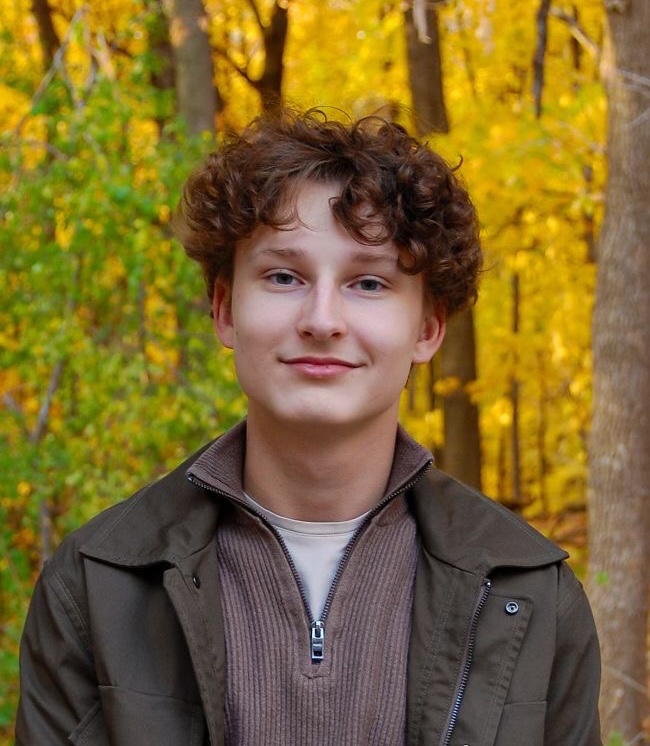
I'm a sophomore Biomedical Engineering student in the Honors Program at the University of Minnesota, with an interest in computational biology and medical devices. Currently at the Hackel Lab, I built CALIVA, a calibrated pathogenicity predictor for missense mutations that fuses protein structure, thermodynamics, and protein language models, reaching 0.961 AUROC, on par with REVEL and AlphaMissense while being the best-calibrated model tested.
I also design evaluations that probe the reasoning limits of leading AI models at Handshake AI. Previously, I built a hybrid brain-computer interface that earned 1st place at the Twin Cities Regional Science Fair and qualified for ISEF. Outside the lab, I've contributed 300+ volunteer hours, consulted for Thermo Fisher Scientific, and sharpened my writing skills as a copy editor.
I'm passionate about developing innovations where biology and engineering intersect that can make a real difference in people's lives.
Experience
Hackel Lab
Independent Researcher · University of MinnesotaBuilt CALIVA: a calibrated missense-variant pathogenicity predictor. Integrated ClinVar, UniProt, and AlphaFold data across ~89,000 variants, modeled mutation energetics with large-scale FoldX ΔΔG calculations, and trained a CatBoost + graph-attention ensemble in PyTorch to 0.961 AUROC; statistically on par with REVEL and AlphaMissense and the best-calibrated tool evaluated (ECE 0.014).
Project overview & live atlas →Handshake AI
AI Model Evaluation Specialist · RemoteDesign adversarial evaluation tasks across text, image, audio, and video that expose reasoning failures in leading AI models. Build stumping multimodal problems (verifying ground truth and analyzing failures across counting, spatial reasoning, extraction, and cross-panel synthesis) and review model outputs for truthfulness, correctness, and instruction following.
Minnetonka Research Program
Researcher & Competitor · Independent ResearchDeveloped a hybrid EEG + eye-tracking brain-computer interface with continuous learning, improving rolling command accuracy to 75–80% over 36 retraining loops for adaptive assistive robotic control. 1st Place in Biomedical Engineering at the Twin Cities Regional Science Fair; ISEF qualifier.
Thermo Fisher Scientific
Student Consultant · VANTAGE ProgramAssessed cybersecurity practices for Thermo Fisher's biomedical product line through stakeholder interviews, competitor benchmarking, and regulatory analysis. Delivered recommendations on legacy product replacement, customer cybersecurity education, and ongoing monitoring.
Peak Performance Twin Cities
Student Consultant · VANTAGE ProgramProvided data-driven hiring recommendations through quantitative and qualitative analysis. Collaborated with team members to present findings and deliver well-rounded strategic solutions.
Research
CALIVA
Hackel Lab · University of Minnesota
A calibrated missense-variant pathogenicity predictor built only from primary features — AlphaFold structure, FoldX thermodynamics, ESM-2 protein-language embeddings, and conservation — with no other predictor's score. A CatBoost + graph-attention ensemble reaches 0.961 AUROC, statistically on par with REVEL and AlphaMissense, while being the best-calibrated model tested (ECE 0.014).
Explore the project →Hybrid Brain-Computer Interface
Minnetonka Research Program · Independent Research
Hybrid brain-computer interface with continuous learning and eye-tracking for adaptive mental command control. Developed a hybrid model integrating EEG-based mental command training with eye-tracking to improve accuracy and adaptability in assistive robotic control. Competed at Twin Cities and Minnesota State Science & Engineering Fairs.